Your brand · A defined supply route
Private-label lubricants,
built from the brief.
Product, packaging, documentation, MOQ and lead time need to work together. We structure those decisions before the quotation stage.
The starting point
Define the range before designing the label.
A private-label project becomes easier to quote when the commercial range is clear: products, grades, packs, estimated volume and target market.
Artwork is important, but it should not be the first decision. Product availability, minimum production quantities, pack components, local labeling rules and technical files can all affect the final structure of the range.
What we need first
A launch list with the intended product names, requested specifications, pack sizes, annual estimate, first-order volume and destination market.
Program structure
Five connected workstreams.
Each workstream is confirmed against the selected producer route. Nothing is assumed from a generic catalogue.
- 01
Range
Products, grades, positioning and target channel.
- 02
Packaging
Pack sizes, cartons, closures, pails, drums or bulk.
- 03
Documents
TDS, SDS and available quality documentation.
- 04
Artwork
Print files, label dimensions and approval workflow.
- 05
Export
Commercial terms, production and shipment documents.
Production routes
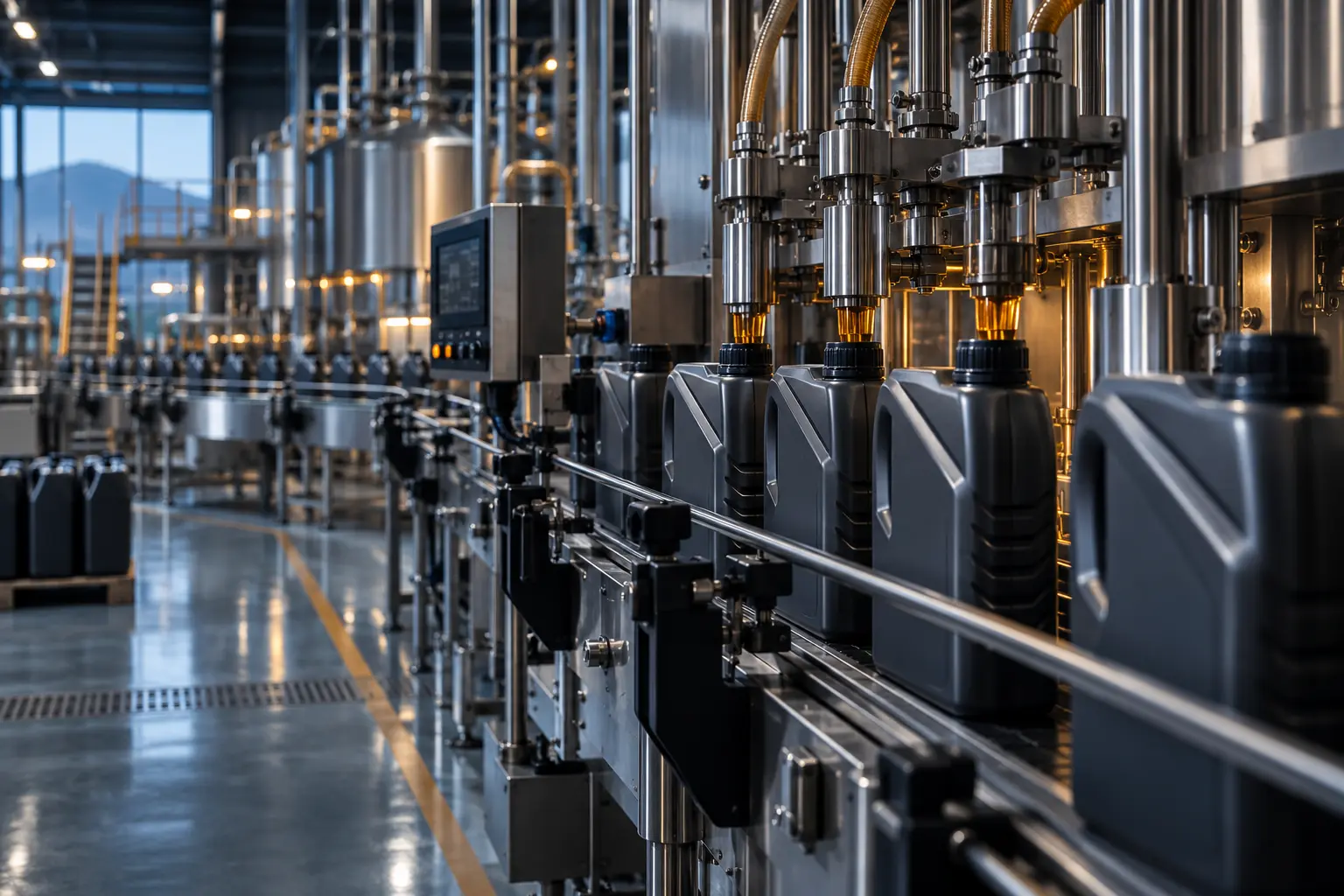
Packaging only works when the line works.
Availability and minimum quantities vary by producer, product and component. We therefore confirm the complete packaging combination—not only the nominal pack size.
Decision matrix
What changes the quotation.
Two projects using the same viscosity can have different economics because packaging, documents and volume are different.
| Input | Why it matters | What to provide |
|---|---|---|
| Product scope | Determines formulation route and document availability. | Product type, viscosity and required performance level. |
| Pack architecture | Affects components, line setup, carton and pallet configuration. | Pack size, units per carton and preferred material. |
| First-order volume | Shapes MOQ feasibility and unit economics. | Quantity by SKU—not only total container volume. |
| Destination market | Changes labeling, compliance and logistics review. | Country, port and intended distribution channel. |
| Approval requirement | May narrow the eligible products considerably. | State whether formal approval is mandatory. |
Private-label FAQ
Questions to settle early.
What is the minimum order quantity?
There is no responsible universal answer. MOQ depends on formulation, pack component, SKU count and producer. We confirm it against the proposed range.
Can we start with many different SKUs?
Technically possible does not always mean commercially efficient. A concentrated launch range usually makes MOQ, artwork and inventory easier to manage.
Who is responsible for local label compliance?
The importer and relevant local parties must validate market-specific requirements. KOMPUS coordinates available producer information but does not replace local regulatory review.
Can samples be arranged before production?
Sample format, courier cost and timing are confirmed according to the matched product and producer policy.